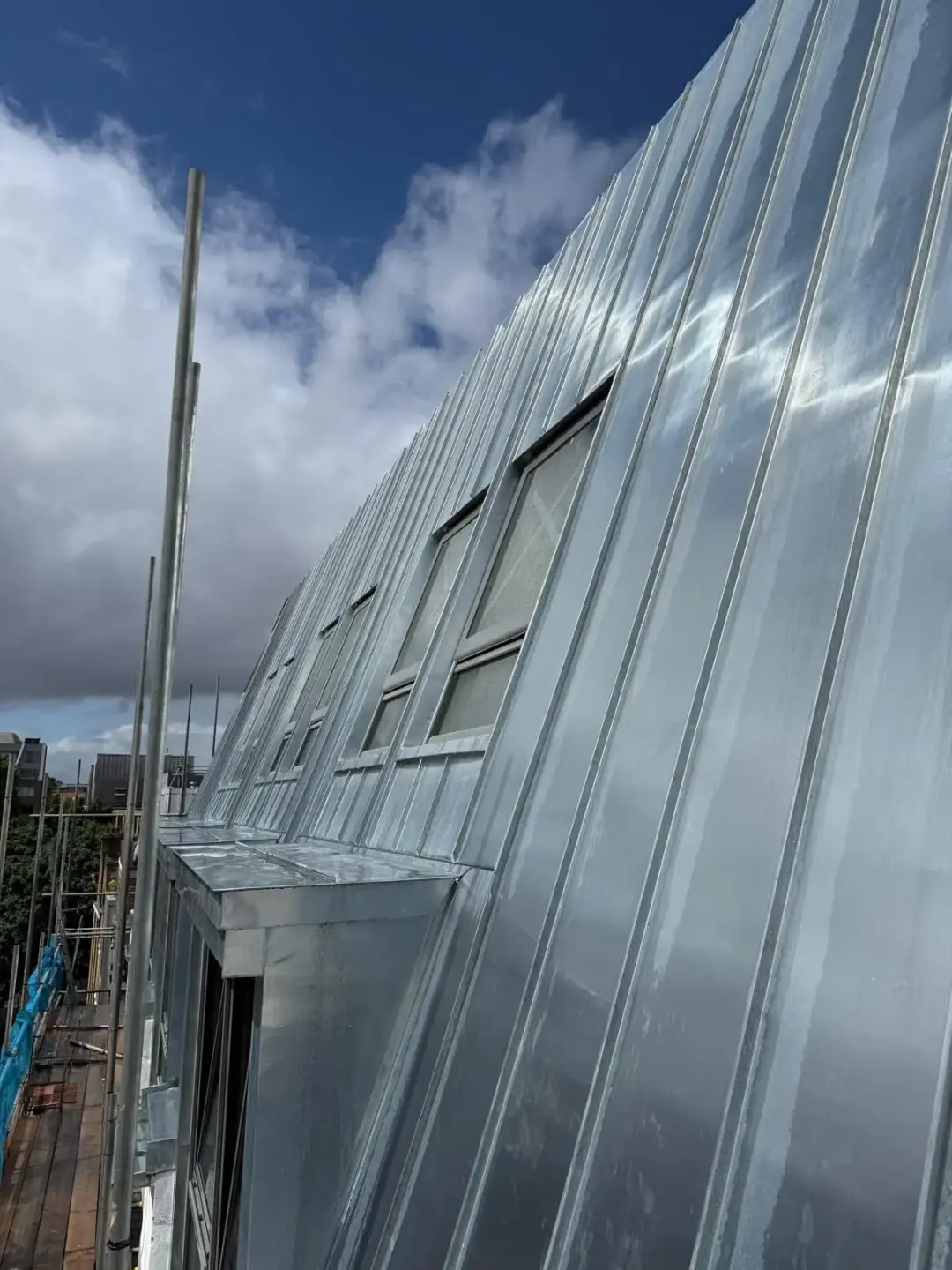
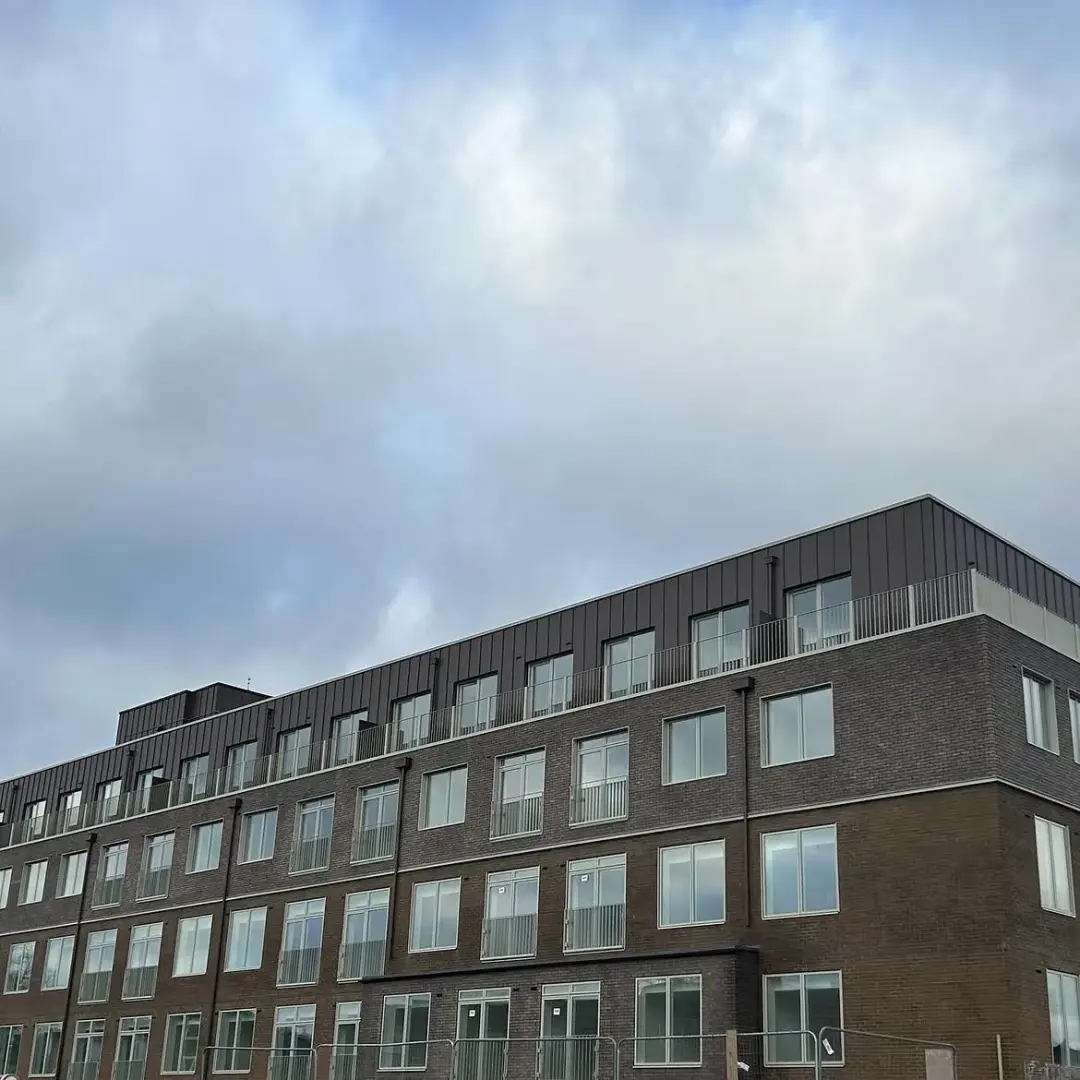
The right metal cladding colour works with the building’s permanent materials, its surroundings and the finish available on your chosen metal. Begin with real samples viewed outdoors, then check gloss, weathering and availability. For a property in London, a small colour swatch on a screen cannot show how an entire elevation will look in changing daylight.
Start with the materials that will remain
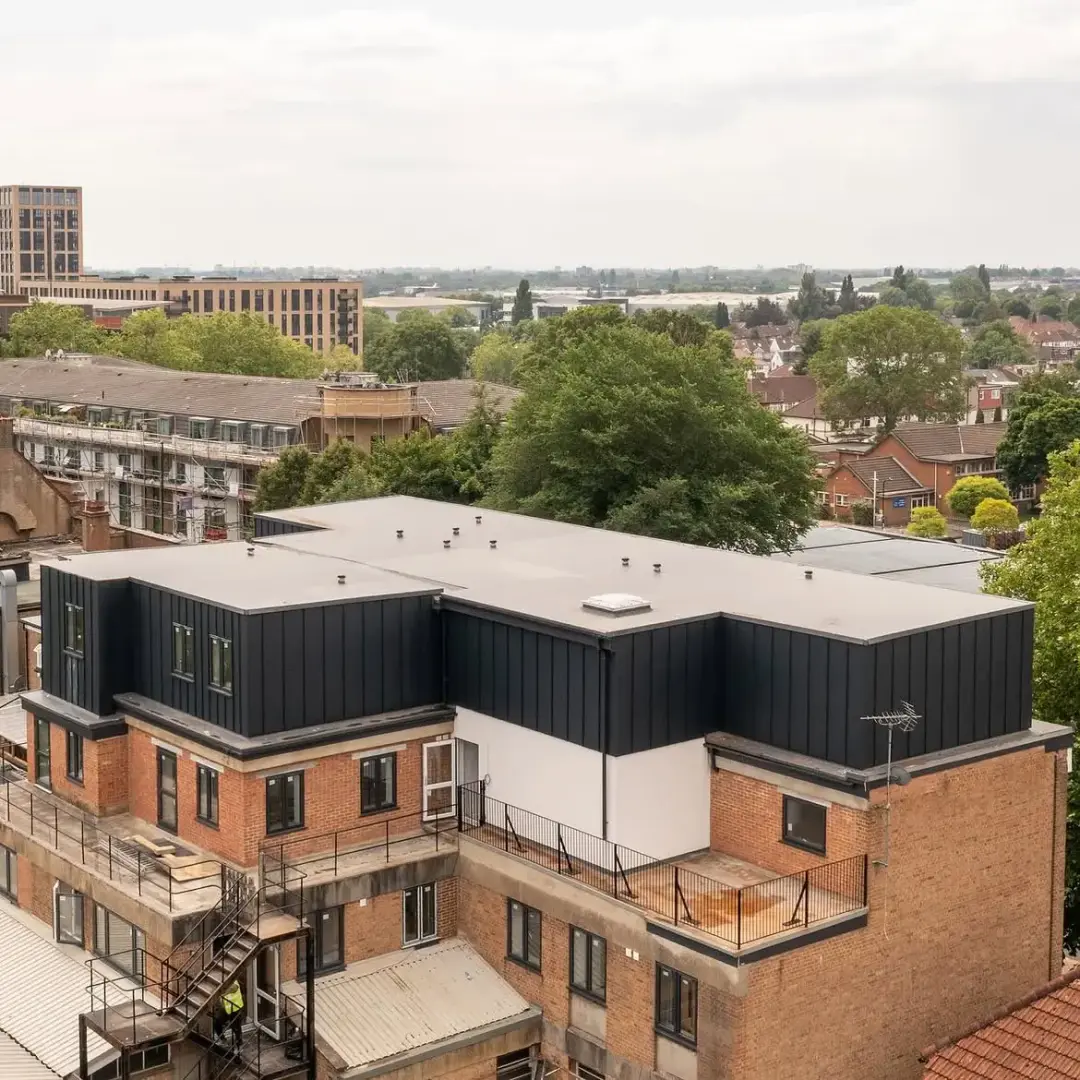
Look first at the brick, stone, roof covering and window frames you are keeping. Decide which should be the visual focus and whether the new cladding should recede or stand out. Warm brick may call for a different grey from cool stone, even where both schemes appear neutral in isolation.
Photograph the elevation straight on and from the approach to the property. Include neighbouring buildings where they shape the street scene. A strongly contrasting dormer may feel balanced above one facade and dominate another. Narrow the palette to a few purposeful options before opening a full colour chart; otherwise the choice can become a search for a favourite swatch without reference to the building.
Use colour codes as a starting point
RAL’s current CLASSIC collection contains 216 colours. A code helps identify an intended shade, but it does not mean every cladding manufacturer supplies it in every coating, metal or gloss level. Availability in a standard product range matters when ordering panels, flashings and later replacement pieces.
Specify the manufacturer, product, colour reference, texture and gloss together. Two products sharing a nominal colour code can still look different when their surface textures and reflections differ. Ask how colour consistency is controlled across coil batches and formed components. Where possible, coordinate adjoining flashings through the same finish system rather than assuming a nearby colour is an invisible match.
Key considerations
- Compare physical samples outdoors against the existing masonry.
- Specify colour, coating, texture and gloss together.
- Approve trims and future weathering before placing the order.
Test samples on the actual elevation
View physical samples beside the existing masonry in morning light, overcast conditions and direct sun. Turn the sample vertically if it will be used on a wall: a piece lying on a table reflects a different part of the sky. Stand back as well as inspecting it closely. The overall impression is often clearer from the pavement than at arm’s length.
For a substantial project, request a representative panel or mock-up that includes the proposed profile and joint. Shadows along ribs and seams can make the same coating read darker than a flat swatch. Leave shortlisted samples in position long enough to see them from inside the property and from neighbouring viewpoints. Record the exact approved sample so everyone orders against the same reference.
Choose gloss and texture alongside the shade
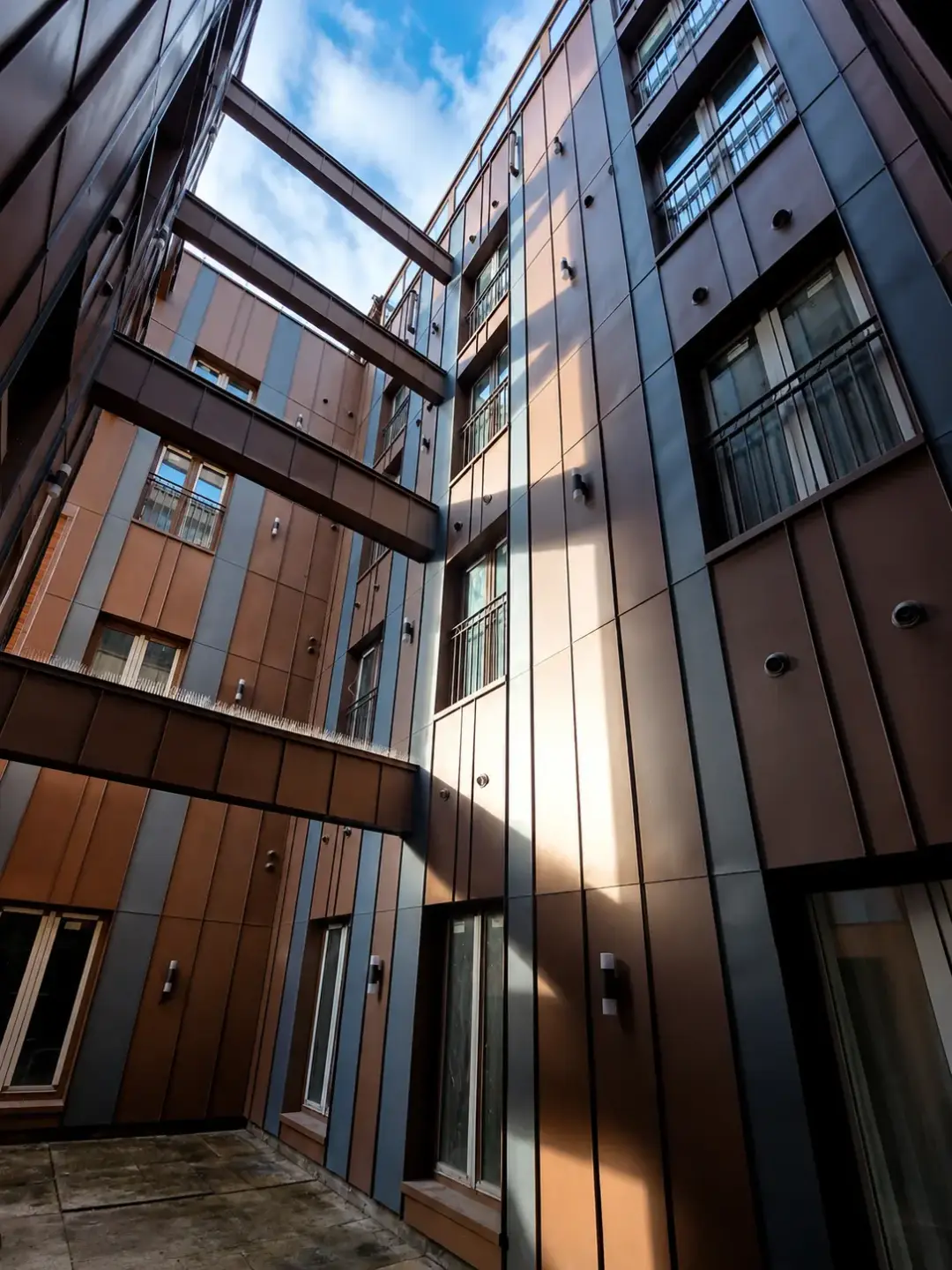
A low-gloss finish can make a large facade visually quieter, while a reflective surface emphasises changing light and surrounding buildings. Neither is automatically better. Consider whether bright reflections would face windows, outdoor seating or a narrow courtyard. Profile direction and panel width alter the effect, even when the paint colour stays the same.
Natural metals add another choice: their appearance can evolve rather than retain a single painted shade. Zinc, for example, offers natural and factory-treated surfaces with different visual character. Review real completed examples rather than asking a colour chart to represent every stage of weathering. Our project photo gallery can help you compare the scale of cladding against brickwork and glazing.
Check how the finish is expected to age
Colour stability is a product-specific performance issue. Tata Steel’s current Colorcoat information states up to 20 years of colour stability for standard Colorcoat Prisma colours, subject to the applicable terms. This is evidence about that range, not a universal guarantee for painted steel, aluminium or every colour choice.
Ask for the relevant finish data and distinguish colour change from corrosion cover. Consider sheltered areas that receive little rain, local pollution and the practicality of future cleaning. Dark surfaces may show pale deposits more readily, while light surfaces can show dirt streaks. Choose a finish whose likely ageing you accept rather than expecting the building to stay identical to a newly installed sample.
Approve the whole scheme before ordering
Include gutters, downpipes, soffits, trims and sealant lines in the final review. A subtle facade can be undermined by conspicuous edge components chosen later. Check whether required planning approvals or conditions constrain appearance, and obtain the appropriate project advice before committing to a bespoke order. Keep an agreed drawing or finish schedule with the samples.
Confirm lead times, minimum order quantities and the policy on later batch matching. If the project will be built in phases, discuss how to manage visible joins between orders. Make one documented approval after reviewing the complete elevation. That gives the installer a clear instruction and reduces expensive changes based on different people remembering a different shade.
How to Choose the Right Colour for Metal Cladding — sources checked 19 October 2026.
Summary
Choose cladding colour through a complete facade review, with physical samples and finish-specific performance information. Ask S H Roofing Ltd to discuss steel cladding options that work with your windows, masonry and intended architectural character.