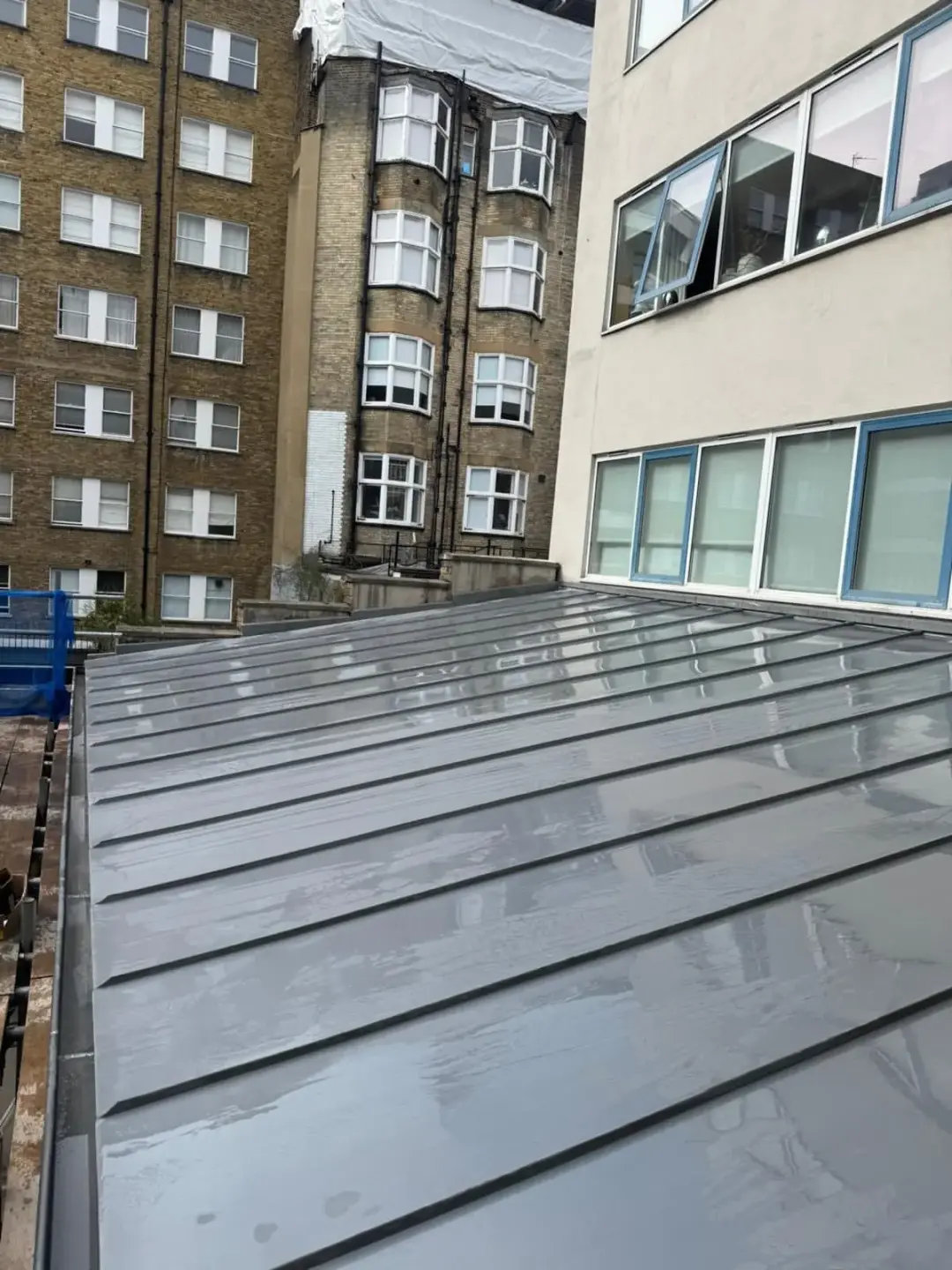
Zinc roofing for coastal properties can work well, provided the finish and roof details are selected for the actual exposure. Salt deposits, sheltered surfaces and wind need separate consideration. For owners comparing projects across London and coastal locations, a material’s suitability should come from a site-specific specification rather than a simple claim that zinc is either seawater-proof or unsuitable near the sea.
Measure exposure, not just distance on a map
Distance from the shoreline is useful, but an elevated open site facing onshore winds may receive more salt than a sheltered site closer to the water. Look at the prevailing wind, terrain and which surfaces face the sea. A recessed wall beneath an overhang can behave differently from an openly exposed roof on the same building.
VMZINC’s current UK coastal guidance distinguishes seafront exposure up to 1km, a sea area from 1–3km and lower maritime influence from 3–20km. These are indicative exposure bands, not boundaries that guarantee performance. Give the manufacturer the location and drawings so the advice addresses the building’s real conditions.
Distinguish staining from loss of function
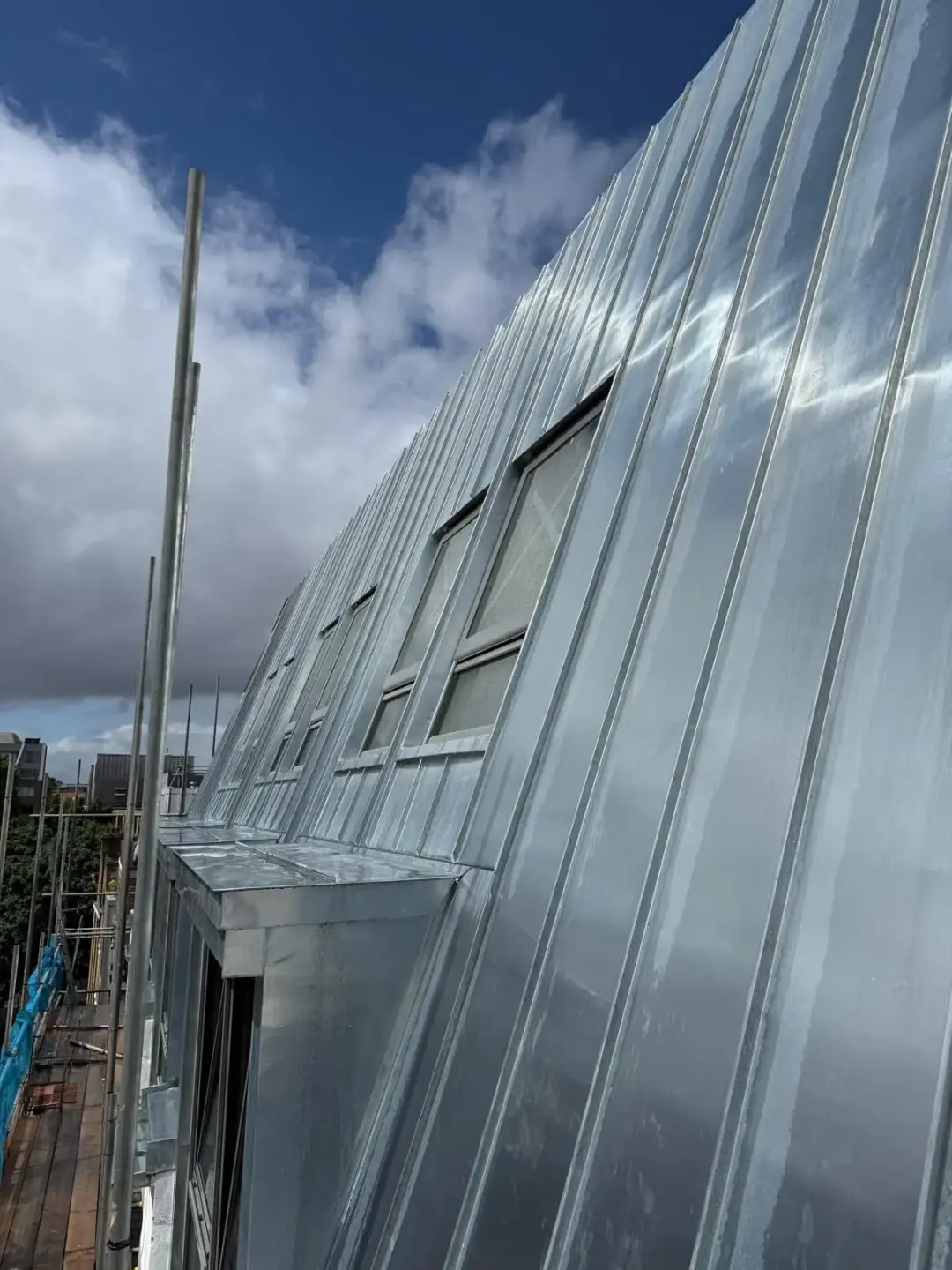
Sea salt can leave visible deposits, particularly where rainfall does not rinse the surface. The result may be an appearance issue rather than evidence of perforation or failed weather resistance. However, the owner should not be expected to accept an appearance they were never warned about. Discuss likely visual changes while samples and finish choices remain open.
Photographs of inland projects cannot predict every coastal outcome. Ask specifically about soffits, sheltered dormer cheeks and protected facade returns, not just the main roof slope. If marks appear after installation, obtain a diagnosis before scrubbing or coating them. A surface treatment chosen without checking compatibility may change the finish while doing nothing to address recurring salt deposition.
Key considerations
- Assess wind, shelter and salt exposure surface by surface.
- Expect dark sheltered areas to show deposits more clearly.
- Confirm coastal finish details and a safe washing plan.
Select finishes for each exposed surface
VMZINC identifies greater staining risk on non-rinsed surfaces within 1km of the sea and notes that dark finishes can make deposits more conspicuous. Its PIGMENTO and STRAT options can reduce staining potential on rain-rinsed surfaces, but they do not remove the need for exposure-specific advice or guarantee a spotless appearance.
That distinction should influence the whole elevation. A finish suitable for an exposed slope may not be the most forgiving choice beneath a deep overhang. Ask the manufacturer to confirm the proposed finish for each location, including formed edges and sheltered details. Compare physical samples with the likely deposits and maintenance access in mind, as well as their appearance on the day of installation.
Coordinate edges, fixings and adjacent materials
Coastal specification reaches beyond the zinc sheet. Fixings, clips, gutters and associated components must be compatible with the chosen system and environment. Check where water from adjoining materials will drain and whether any contact or runoff could cause a problem. Include later additions such as rails and equipment supports in that review.
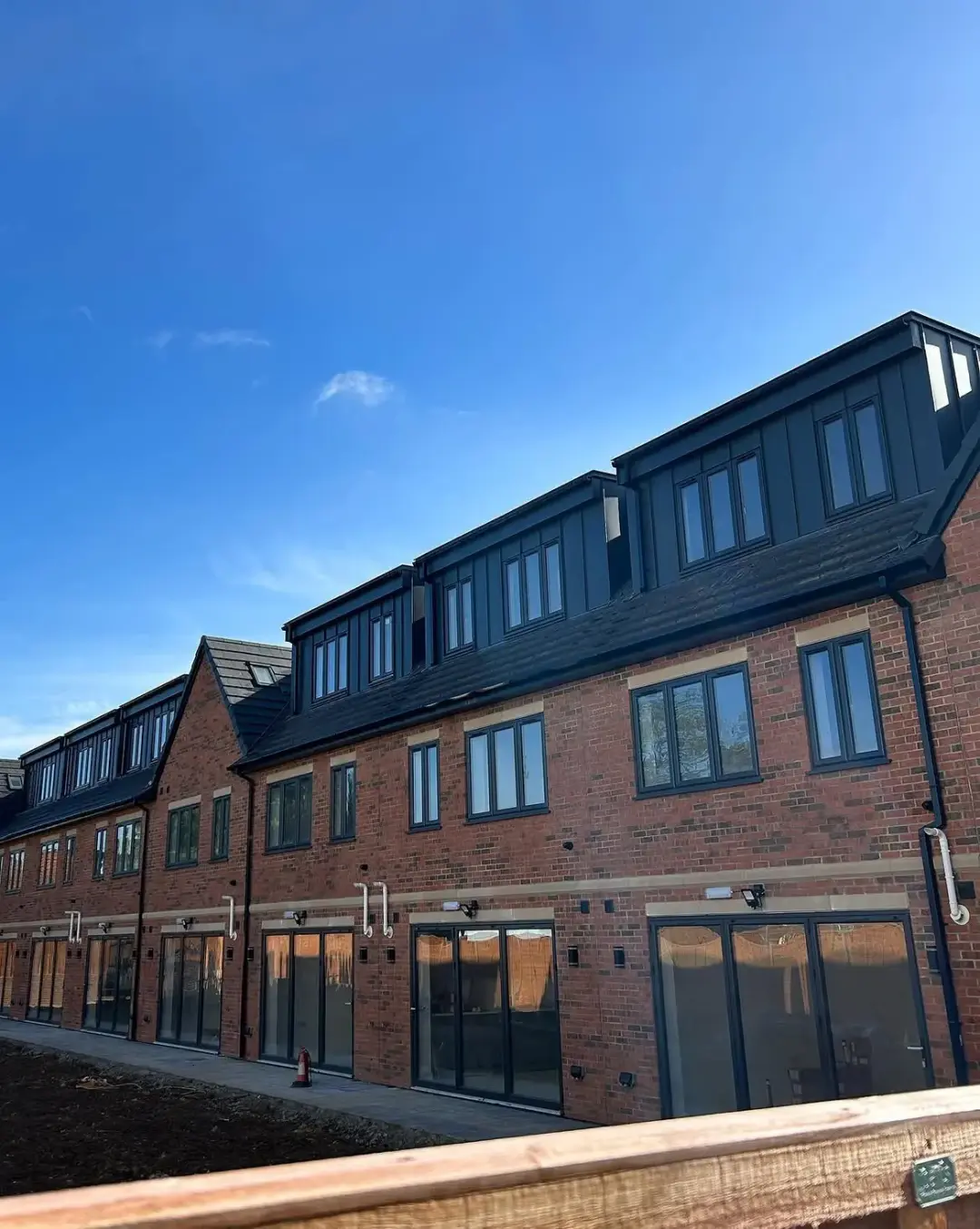
VMZINC’s coastal advice also warns against leaving bare PIGMENTO or STRAT edges exposed. The installer therefore needs the correct fabrication and edge details, not just the right finish name on a delivery note. Our metal cladding service is relevant where the same project carries zinc from the roof onto walls and sheltered returns.
Treat wind resistance as its own design task
Salt resistance does not establish that a roof can withstand the site’s wind loads. An exposed headland, roof edge or corner can need a different fixing arrangement from a sheltered inland roof. The support, tray layout, clips and terminations should be specified together for the geometry and exposure of the building.
Ask who provides the wind-load assessment and how the installation follows it. Avoid borrowing a clip-spacing rule from a different roof or treating a thicker sheet as a substitute for the complete design. Ensure that penetrations and attached equipment are included. A carefully chosen surface finish cannot compensate for an inadequately fixed edge or a substrate unable to carry the resulting loads.
Agree a realistic coastal care plan
For salt deposits, VMZINC advises preventive washing with clean water at least twice a year. The appropriate method and access arrangements should be agreed with its technical team for the chosen surface. This is coastal deposit management, not a recommendation to pressure-wash every zinc roof or polish away its normal patina.
Identify how gutters, sheltered returns and inaccessible soffits will be checked and cleaned safely before the project starts. Keep photographs and records so changes can be discussed with the installer. Obtain written confirmation of warranty applicability and exclusions for the address. A coastal zinc roof is most convincing when material choice, appearance expectations and practical maintenance form one coordinated plan.
For a holiday property that stands empty between visits, appoint someone to report storm damage and blocked drainage. A sensible response arrangement is especially valuable where a minor fault could otherwise remain unnoticed for weeks.
Is Zinc Roofing Suitable for Coastal Properties? — sources checked 19 October 2026.
Summary
Zinc can suit a coastal property when its specification accounts for salt, rainfall rinsing, wind and access. Ask S H Roofing Ltd to discuss the roof and cladding details, with manufacturer input on the finish proposed for your location.