The pros and cons of zinc roofing centre on its architectural flexibility and long-term appearance, balanced against specialist detailing and a higher commitment to getting the roof construction right. For a home or extension in London, zinc can be an excellent fit, but choosing it should follow a review of roof geometry, workmanship and the finish you want to live with.
Pro: zinc suits distinctive roof shapes
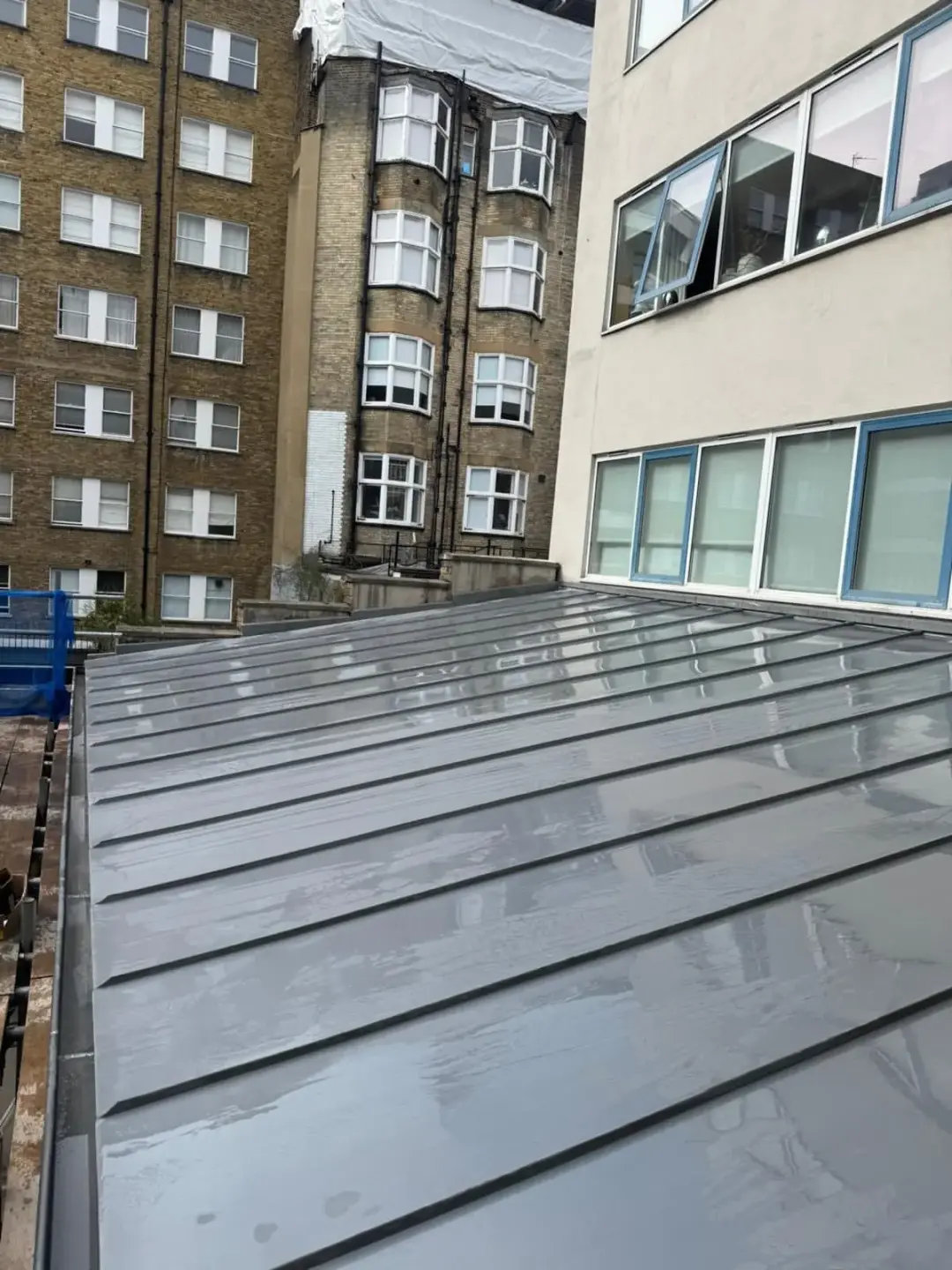
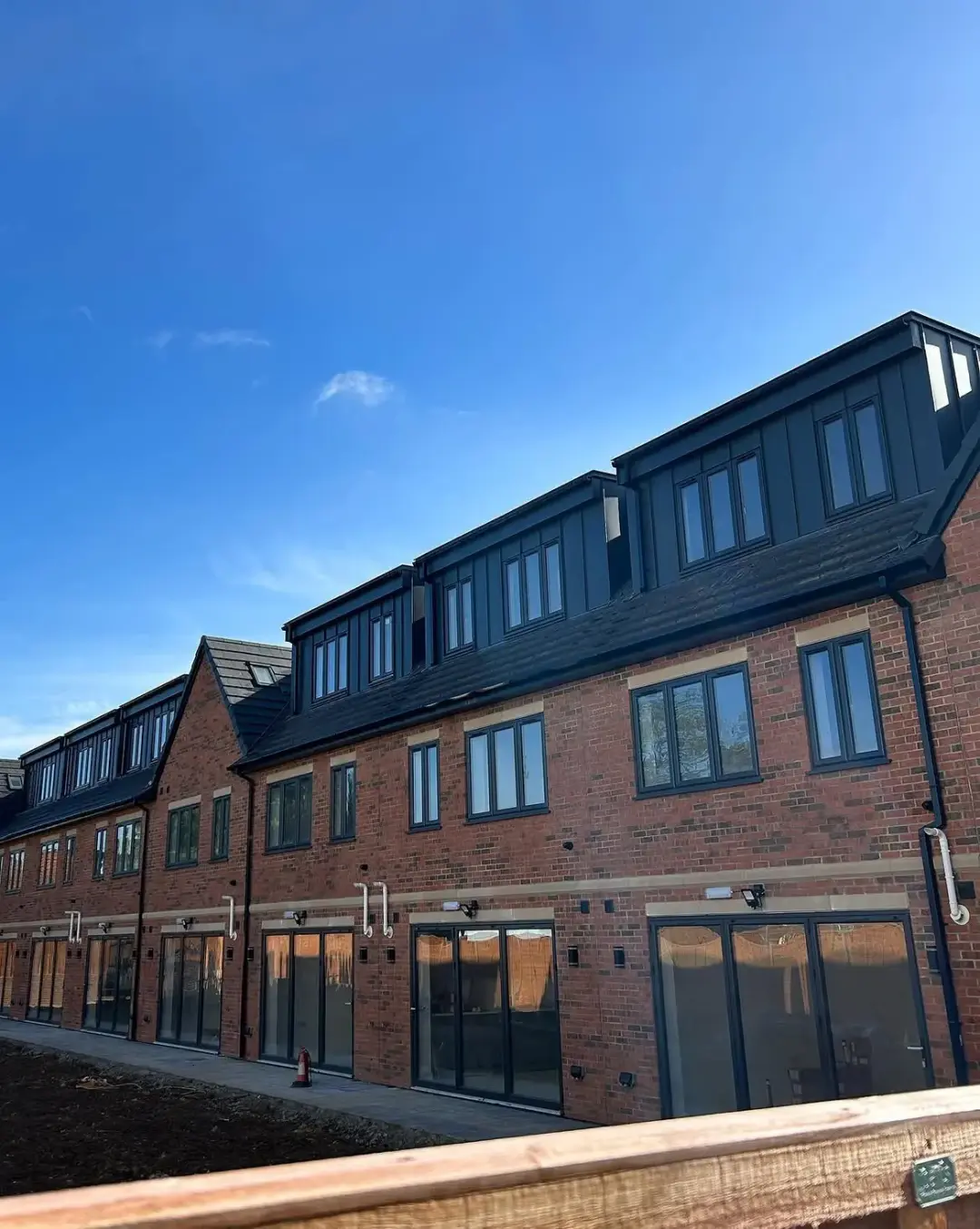
Zinc can be folded into standing seams and formed around carefully designed curves, dormers and junctions. That makes it attractive when a project needs a continuous architectural language across roofs and vertical surfaces. Its visual strength often comes from orderly seam spacing and well-resolved edges, rather than decoration added to a conventional covering.
This flexibility does not make every shape straightforward or inexpensive. Small corners, changing slopes and penetrations create fabrication and installation work. Ask for drawings showing how those details are resolved and where joints will sit. Comparing proposed seam layouts on the elevation can reveal awkward narrow pieces before any metal is ordered, when changes remain easier to make.
Pro: the surface can age with the building
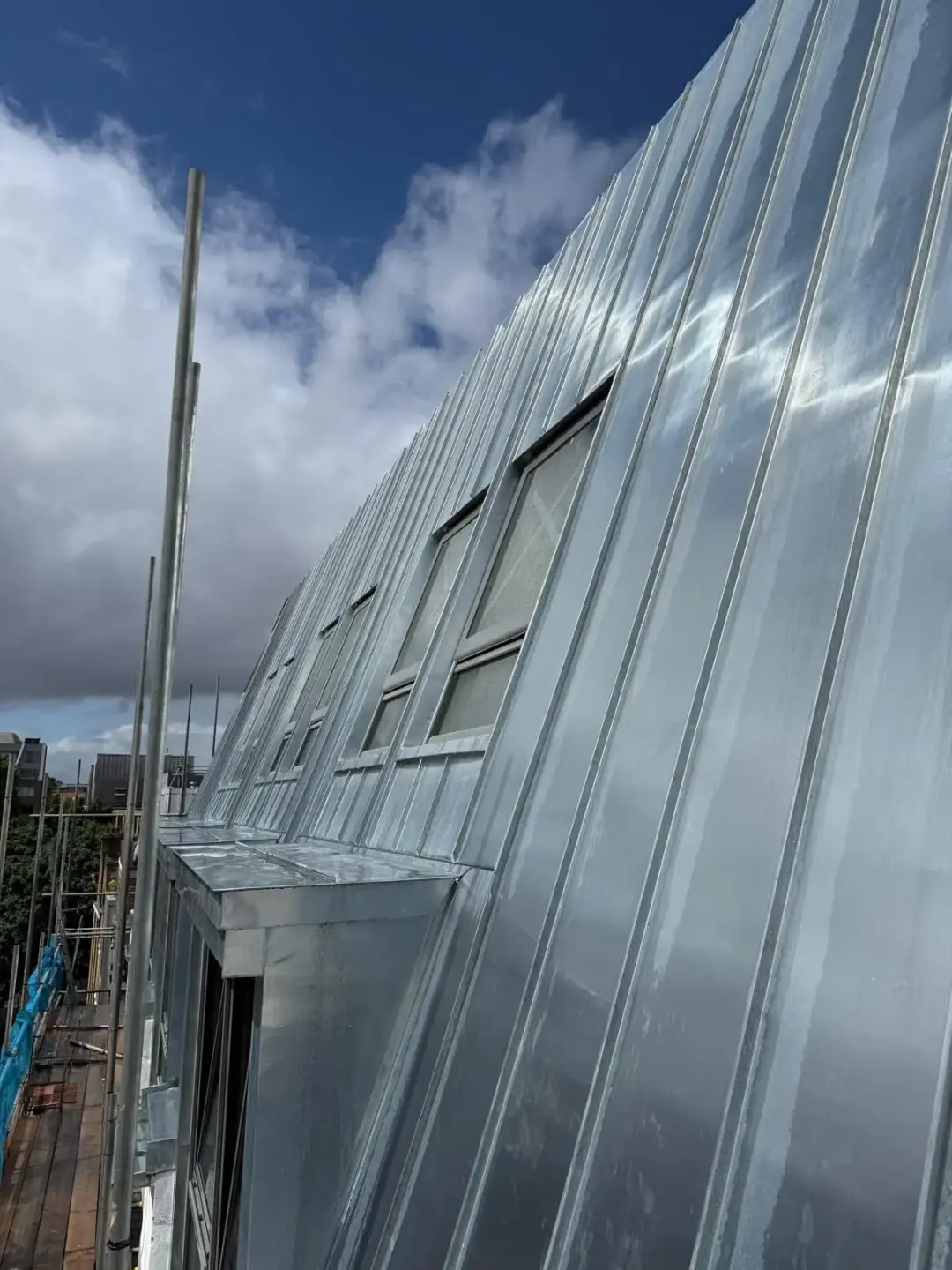
Natural zinc changes from its initial metallic appearance as a patina develops. Some owners value that evolving character more than a permanently uniform painted surface. Factory-treated finishes provide other starting appearances, so zinc is not limited to a single silver-grey look. Review actual samples and completed buildings to understand what the selected finish is intended to do.
Accept that different orientations and shelter can produce different visual effects. A uniform rendering is not a promise of identical colour on every panel through every season. If a very consistent block colour is your priority, discuss whether another coated metal would better match it. Choosing zinc works best when its natural surface behaviour is part of the design intention.
Key considerations
- Review real zinc finishes and accept their changing appearance.
- Allow movement through a manufacturer-designed fixing arrangement.
- Specify the complete roof build-up before covering the deck.
Pro: recoverable material has continuing value
Zinc can be recovered at the end of a building component’s useful life, making careful dismantling and segregation worthwhile. For a product-specific example, RHEINZINK’s current material information states that its products contain 30% secondary material. This is a manufacturer figure for its own products, not the recycled content of every zinc roof.
Environmental comparison should still consider the whole assembly, including insulation, support layers, transport and the likely replacement schedule. Ask for the relevant environmental product declaration and compare equivalent functions. Being recyclable does not mean a product has no manufacturing impact, nor that every offcut will be recovered automatically. Agree how installation waste will be collected rather than relying on a broad green claim.
Con: thermal movement needs deliberate detailing
Zinc expands and contracts, so the roof must accommodate movement rather than restrain every tray rigidly. RHEINZINK lists a longitudinal expansion rate of 2.2mm per metre over a 100°C temperature change on its material properties page. As an illustrative calculation, a 10m length changes by about 11mm over a 50°C swing.
That arithmetic is not a fixing design: actual details depend on the product, tray layout, temperature conditions and the manufacturer’s system. It explains why clips, fixed zones and terminations matter. Later additions must not lock the trays in place. Our standing seam roofing page introduces the system used to create these raised-seam surfaces.
Con: the supporting build-up is less forgiving
A beautiful external finish cannot compensate for unsuitable support or uncontrolled moisture beneath it. Warm and ventilated cold roof constructions need their own coordinated details. The correct zinc grade, substrate, separation layers and vapour control must be chosen as an assembly. Mixing isolated details from different systems can leave the roof without a coherent moisture strategy.
Ask who is responsible for the complete specification and what evidence supports it. The installer should understand the proposed build-up, not simply be asked to cover a prepared deck of uncertain construction. This is particularly important where another trade has already installed insulation or boarding. Resolve discrepancies before the covering hides them and before liability becomes divided between contractors.
Con: appearance and repair need specialist judgement
Zinc can show waviness, handling marks or local surface variation that may be more visible in certain light. Samples and realistic expectations help separate normal characteristics from defects. A pronounced dent or distorted seam is a different matter from subtle reflected ripples. Agree the required finish and discuss panel proportions before installation.
Repairs and extensions also need care. Matching the appearance of weathered zinc with new material can be difficult, and an improvised coating may make a blemish more obvious. Choose installers who can explain their proposed details, provide traceable product information and discuss how local repairs would be handled. A lower initial price offers little advantage if important junctions are left unresolved.
Check the quotation’s treatment of rooflights and drainage as carefully as the zinc finish. These interfaces are essential to the finished result and should not be left for the installation team to improvise.
The Pros and Cons of Zinc Roofing — sources checked 19 October 2026.
Summary
Zinc offers strong design possibilities when its surface character and construction requirements suit the project. Ask S H Roofing Ltd to weigh those benefits against the detailing, access and workmanship your roof will need.